Back to School Icebreaker Activities: A Practical Guide to Building Community on Day One
The first week of school sets the tone for the entire academic year. For educators, this period is often a balancing act between establishing routines and fostering a sense of belonging among students who may be anxious or unfamiliar with one another. Back to School icebreaker activities have emerged as a critical tool in addressing this challenge. Unlike standard lesson plans that focus solely on curriculum, these activities are designed specifically to lower social barriers, encourage self-expression, and create a safe environment for learning.
However, not all icebreakers are created equal. Some rely on high-energy physical games that can overwhelm introverted students, while others may feel too childish for older elementary learners. This is where structured resources, such as a comprehensive Back to School Activities Workbook, offer a distinct advantage over ad-hoc planning. By providing a curated collection of printable, low-prep tasks, these workbooks allow teachers to facilitate meaningful connections without the stress of designing materials from scratch.
What Distinguishes a Structured Icebreaker Workbook?
When evaluating different approaches to classroom community building, it is important to understand what makes a dedicated workbook distinct from scattered digital slides or spontaneous verbal introductions. The primary differentiator lies in the depth and variety of engagement offered within a single resource.
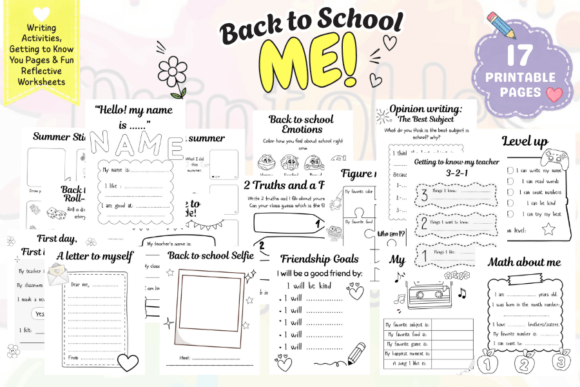
A well-designed Back to School Activities Workbook typically integrates multiple learning modalities. It moves beyond simple "name tags" to include layers of reflection, creativity, and social-emotional learning (SEL). For instance, rather than just asking students to share their favorite color, a workbook might guide them through an "All About Me" page that includes a "Figure Me Out" puzzle or a creative writing prompt about their summer. This structure ensures that every student has a tangible product to show for their participation, which can significantly boost confidence.
Furthermore, these workbooks often address the emotional landscape of returning to school. Sections dedicated to Emotions Check-Ins or Letters to Myself provide students with a private space to process feelings of excitement, nervousness, or change. This level of introspection is difficult to achieve in a whole-class circle time activity but is easily facilitated when students work individually through a packet. The inclusion of black-and-white designs also serves a practical purpose, ensuring that printing costs remain low and that coloring becomes part of the engagement process, allowing students to personalize their materials immediately.
Comparing Approaches: Digital vs. Printable Resources
In the modern educational landscape, teachers often face a choice between digital platforms and traditional printables. When considering Back to School icebreaker activities, understanding the tradeoffs between these formats is essential for making an informed decision.
- Digital Options: Interactive slides or online forms offer immediate feedback and easy distribution via Learning Management Systems (LMS). They are ideal for tech-savvy classrooms and allow for quick data aggregation. However, they require reliable hardware, internet connectivity, and screen time management. Additionally, some students may find typing responses less engaging than drawing or writing by hand.
- Printable Workbooks: These resources shine in environments where tactile interaction is preferred. A printable PDF workbook allows students to disconnect from screens and engage physically with the material. This format supports fine motor skills development and provides a permanent record of student thought processes that can be kept in portfolios. The "low prep" nature of these packets means they can be distributed instantly without technical troubleshooting.
For many educators, the printable workbook strikes the best balance. It eliminates the friction of technology setup during the chaotic first week while offering more structure than a blank piece of paper. The ability to use these sheets as morning work, centers, or early finisher activities adds significant versatility that purely digital tools sometimes lack.
Evaluating Fit: Strengths and Limitations
No single resource is a perfect solution for every classroom context. To determine if a specific set of Back to School icebreaker activities is the right choice, educators must weigh the strengths against potential limitations based on their specific needs.
Strengths of Comprehensive Workbooks
The most significant advantage of using a structured packet is the reduction of cognitive load for the teacher. With a pre-made collection that includes everything from Friendship Goals to Opinion Writing, the educator can focus on facilitating discussion rather than scrambling for content. This consistency ensures that all students receive equitable access to community-building exercises.
Additionally, these workbooks often cater to diverse learning styles. The inclusion of math-based activities like Math About Me appeals to logical thinkers, while Roll-a-Story and Insta Summer Pages engage creative and visual learners. This variety helps ensure that even students who struggle with traditional academics can shine during the introduction phase.
Potential Limitations
While highly effective, printed workbooks do have constraints. They are static; once printed, they cannot be easily updated to reflect current events or specific class dynamics without manual intervention. Furthermore, for large classes, managing the physical distribution and collection of 20+ pages can be time-consuming compared to a digital submission.
There is also the consideration of differentiation. A generic workbook may not perfectly align with the specific developmental stage of every grade level. Teachers may need to adapt prompts or scaffold instructions for younger students who are still developing writing fluency. Therefore, the resource should be viewed as a flexible framework rather than a rigid script.
When to Choose a Workbook vs. Other Strategies
Deciding whether to implement a Back to School Activities Workbook depends largely on the goals of the first week and the available resources. In situations where the primary goal is rapid team bonding through movement and vocal interaction, a pure game-based approach might be superior. If the classroom culture relies heavily on collaborative digital projects, a hybrid model incorporating both print and digital elements could be optimal.
However, a workbook is the ideal choice when the following criteria are met:
- Need for Reflection: If the priority is helping students articulate their thoughts and emotions privately before sharing publicly, the written format of a workbook is unmatched.
- Time Constraints: When teachers have limited planning time due to administrative duties or sub-plans, a "print and go" resource saves hours of preparation.
- Substitute Teacher Readiness: A complete packet with clear instructions allows substitutes to maintain the momentum of community building even when the regular teacher is absent.
- Early Finisher Support: Having a stack of engaging, themed activities ready for students who complete their morning work quickly prevents downtime and behavioral issues.
Maximizing Impact Through Strategic Use
To get the most out of Back to School icebreaker activities, educators should view the workbook as a dynamic component of the daily schedule rather than a one-time event. The included activities can be broken down strategically throughout the first few days.
For example, the All About Me and Selfie Letter pages can serve as quiet entry tasks during the first hour of school, allowing students to settle in while expressing themselves. Later in the day, the Friendship Goals and Get to Know My Teacher sections can transition into partner discussions or small group shares. The Emotions Check-In can be utilized at the end of the day to gauge the class's mood and adjust future lessons accordingly.
This flexibility transforms a simple packet into a comprehensive strategy for classroom management and social-emotional growth. By integrating these activities into various parts of the day—morning work, centers, or sub plans—teachers reinforce the message that the classroom is a place where every voice matters and where personal expression is valued alongside academic achievement.
Ultimately, the success of any Back to School icebreaker activity relies on the intention behind its implementation. Whether choosing a digital platform, a game, or a detailed workbook, the goal remains the same: to build a foundation of trust and connection. For teachers seeking a balanced, low-stress, and deeply engaging way to start the year, a structured, printable workbook offers a proven path to turning the first week of school into an exciting and memorable experience for everyone involved.