Back to School Word Search, Scramble C: An Educational Resource Evaluation
The transition from summer break to the academic year often presents a unique set of challenges for educators and students alike. One of the primary objectives during the first week of school is to re-engage learners while minimizing anxiety and fostering a positive classroom environment. Back to School Word Search, Scramble C has emerged as a specific resource designed to address these needs through a combination of puzzle-based activities. This evaluation explores the functionality, educational value, and practical applications of this activity set to help educators determine if it aligns with their instructional goals.
Understanding the Resource
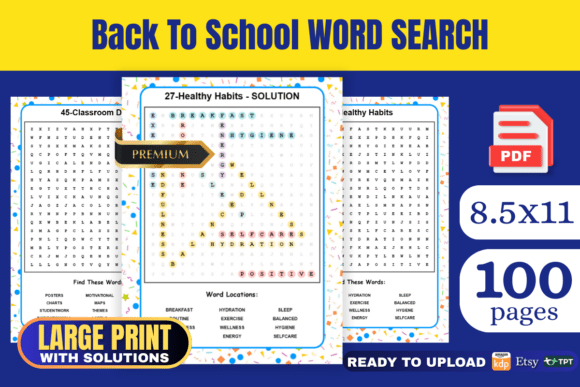
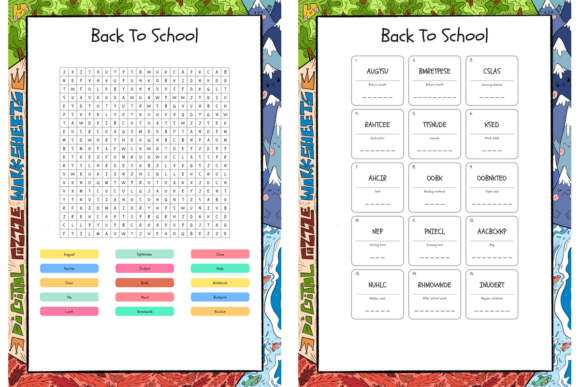
Back to School Word Search, Scramble C is an educational worksheet collection that integrates three distinct types of word puzzles: word searches, word scrambles, and crosswords. The "C" designation typically indicates a specific difficulty level or thematic variation within a series, suggesting content tailored to a particular grade band or cognitive complexity. The core premise involves using academic vocabulary, school-related terminology, and general knowledge terms relevant to the start of the school year.
The resource is structured to challenge cognitive abilities without relying on traditional lecture-based instruction. By requiring students to identify hidden words in a grid, unscramble jumbled letters to form correct terms, and fit definitions into intersecting crossword grids, the material engages multiple areas of the brain simultaneously. This multi-modal approach aims to ignite curiosity and passion for learning right from day one, transforming what could be a passive introduction to the curriculum into an active problem-solving experience.
Educational Benefits and Cognitive Engagement
The primary advantage of utilizing Back to School Word Search, Scramble C lies in its ability to reinforce vocabulary acquisition through gamification. When students engage with word scrambles, they must analyze letter patterns and apply phonetic rules, which strengthens spelling skills and orthographic awareness. Similarly, word searches require visual scanning and pattern recognition, enhancing attention to detail.
- Vocabulary Retention: Repeated exposure to key terms in different formats (searching vs. scrambling) aids in long-term memory retention.
- Critical Thinking: Crossword puzzles necessitate logical deduction. Students must interpret clues and cross-reference answers, fostering analytical skills essential for academic success.
- Engagement: The "fun-filled brainteaser" aspect reduces the perceived pressure of formal testing, allowing students to focus on learning concepts in a low-stakes environment.
Furthermore, these activities serve as effective icebreakers. They provide a shared task that encourages collaboration among peers, helping to build classroom community before formal group work begins.
Practical Considerations and Tradeoffs
While the benefits are clear, educators must weigh several factors when deciding whether to incorporate this resource into their lesson plans. Like any teaching tool, Back to School Word Search, Scramble C has limitations that depend heavily on implementation strategy.
Depth of Content: A significant tradeoff is the depth of learning compared to direct instruction. While these puzzles are excellent for reinforcement and review, they may not be sufficient for introducing complex new concepts. They function best as supplementary materials rather than standalone curriculum components. Educators should expect them to solidify existing knowledge rather than generate deep conceptual understanding on their own.
Differentiation Challenges: Standardized worksheets often present a "one-size-fits-all" scenario. If the difficulty level of the scramble or search does not match the proficiency of the class, engagement can drop. Advanced students might find the tasks trivial, while struggling readers may feel frustrated by the decoding requirements. Successful implementation requires careful monitoring to ensure the activity remains accessible yet challenging for all learners.
Situations Where This Resource Is a Strong Fit
There are specific scenarios where Back to School Word Search, Scramble C proves particularly effective. It is an ideal choice for the following situations:
- Substitute Teaching: For substitute teachers who need immediate, self-contained activities that require minimal preparation, this set offers a ready-to-use solution that keeps students occupied and learning.
- Early Finishers: In classrooms where pacing varies, having a stash of engaging puzzles ensures that students who complete core assignments early have meaningful work to do.
- Transition Days: On the first day of school, when routines are being established, these activities provide a structured way to settle students into the classroom atmosphere without overwhelming them with strict behavioral expectations immediately.
- Review Sessions: At the end of a unit or during test prep, the variety of formats helps refresh memory regarding key terminology in an enjoyable manner.
When to Consider Alternatives
Conversely, there are contexts where other resources might be more appropriate. If the goal is to introduce a completely new, abstract concept such as advanced algebraic theory or complex scientific processes, a word puzzle will likely be insufficient. In cases where the curriculum demands deep textual analysis or creative writing, a puzzle activity might distract from the primary learning objective.
Additionally, for schools with limited printing budgets or those transitioning to fully digital environments, physical worksheets may not be the most efficient choice. In such instances, digital equivalents or interactive whiteboard games might offer better accessibility and instant feedback mechanisms. Educators should also consider the age appropriateness; younger students may struggle with the reading comprehension required for crossword clues, whereas older students might find the theme too juvenile if not carefully selected.
Decision-Making Insights for Educators
To determine if Back to School Word Search, Scramble C aligns with your specific needs, consider the following decision-making framework:
Assess Learning Objectives: Are you aiming to review vocabulary or introduce new material? If the former, this resource is highly suitable. If the latter, use it only as a brief warm-up.
Evaluate Student Needs: Consider the reading levels and cognitive diversity of your class. Can the puzzles be easily modified or differentiated to support various learners?
Time Management: Estimate how much time you can dedicate to the activity. These puzzles are generally quick to administer but require time for completion. Ensure they fit within your schedule without encroaching on essential instructional time.
Integration Strategy: Plan how the activity connects to broader lessons. For instance, follow up a word scramble session with a discussion on why certain terms are important to the school year, thereby bridging the gap between play and pedagogy.
Conclusion
Back to School Word Search, Scramble C represents a valuable tool in the educator's arsenal for kick-starting the academic year. By combining cognitive challenges with thematic relevance, it offers a practical method to engage students, reinforce vocabulary, and foster a positive learning atmosphere. While it is not a replacement for comprehensive curriculum delivery, its utility as a supplementary activity, icebreaker, or review tool is well-established.
Ultimately, the effectiveness of this resource depends on thoughtful integration. When used strategically to complement broader instructional goals, it can brighten the education journey for students, turning the initial days of school into an exciting opportunity for intellectual growth and discovery.